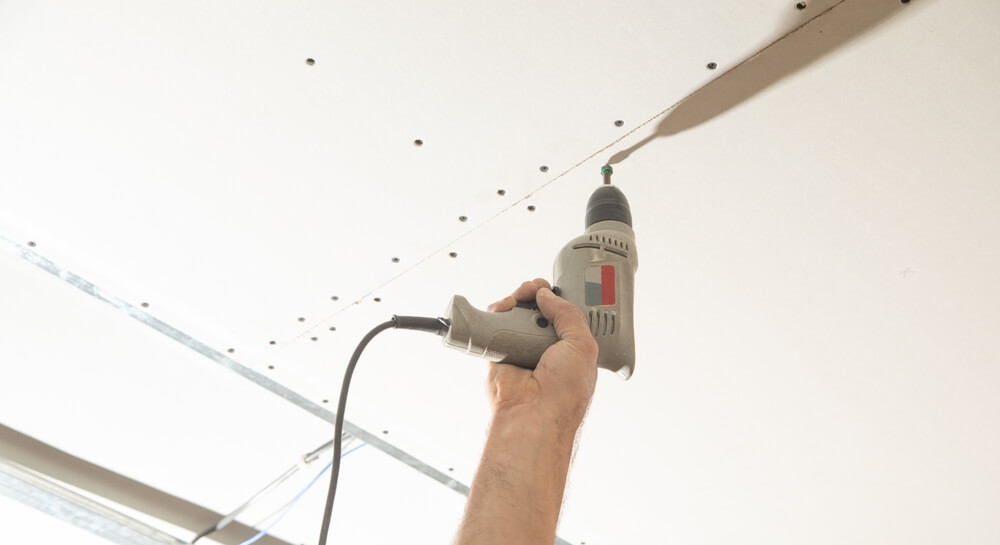
There’s nothing quite as satisfying as a perfectly smooth, freshly plastered wall. But that professional finish is only as good as what’s happening underneath the surface.
A common question you’ll hear is, “What screws do I actually need for plasterboard?”
It’s a fair question. While they might all look similar in a box, using the wrong screw is a recipe for disaster. Use a screw that’s too short, and your boards may sag; use a standard wood screw instead of a dedicated drywall fixing, and you’ll likely tear the paper liner, stripping the board of its structural integrity. Even worse, the wrong choice today often leads to the dreaded “screw pops” appearing through your paintwork six months down the line.
At ASP Ltd, we believe that high-quality fixings are the foundation of every successful build. In this guide, we strip away the jargon to explain exactly how to choose the right thread, length, and material for your specific project. This will help to keep the boards secure and give you a finish that stays crack-free for years to come.
Drywall vs. wood screws
At first glance, a screw is a screw… until you look closely at what it’s designed to do.
Standard wood screws are made to bite into timber and pull two solid materials together. Plasterboard is different: it’s a brittle gypsum core wrapped in a paper line, and that paper face is a big part of what gives the board its strength. The problem with using ordinary wood screws is the head shape and how it seats in the hole.
Most wood screws have a countersunk head designed to wedge into timber. When you drive that into plasterboard, it often acts like a blade, cutting and tearing the paper liner rather than gently compressing it. Once that paper is damaged, the screw has far less to hold onto, which can lead to:
- Weakened fixings, where the board can shift or loosen over time
- Overdriving ,where the screw sinks too deeply and crushes the core
- Screw pops later on as the board moves and the damaged area fails around the fixing
Why bugle head screws are the right choice
Plasterboard screws are built specifically to avoid these issues, and the key feature is the bugle head.
A bugle head isn’t a sharp cone like a typical countersunk wood screw. Instead, it has a smooth, curved underside that spreads the load as it pulls into the board. That curve lets the head sink just below the surface without ripping through the paper face, which is exactly what you want.
In practical terms, bugle heads help you get that sweet spot where the screw is:
- Flush or just below for easy taping and skimming
- Secure, because the paper face stays intact
- Less likely to pop, because the fixing stays stable as the building settles
If you want a clean finish that lasts, plasterboard screws with a bugle head are non-negotiable.
Choosing by substrate
Once you’re using proper plasterboard screws, the next decision is choosing the right type for what you’re fixing into. For most jobs, it comes down to two main scenarios: metal studs or timber.
Fine thread screws: for metal studs
If you’re fixing plasterboard to metal studwork (like lightweight steel framing), you’ll typically use fine-thread drywall screws.
Fine threads are closer together, which helps the screw cut into thin-gauge metal without grabbing too aggressively. That matters because metal studs don’t behave like wood fibres; if the thread is too chunky, it can tear the hole out or fail to seat properly.
Why fine thread works for metal:
- They drill and bite into metal cleanly
- Less chance of stripping the metal as you drive them
- More consistent fixing strength across the board
Coarse thread screws: for timber joists and studs
If you’re fixing plasterboard to timber studs, battens, or joists, use coarse-thread plasterboard screws.
Coarse threads are deeper and more widely spaced, which gives them a much stronger grip in wood because they can lock into the wood fibres. This helps pull the plasterboard tight to the framing and reduces the risk of movement later.
Why coarse thread works for wood:
- Better grip in wood fibres
- Strong pull-in for tight, solid fixing
- Reduced risk of loosening as timber expands and contracts
What length should you use?
Screw length matters more than most people think. Too short and the board won’t be properly secured. Too long, and you risk hitting pipes or cables, or simply making the job harder than it needs to be.
A good rule of thumb is: choose a screw long enough to go through the plasterboard and embed securely into the stud/joist. It’s most likely to fall within these common sizes.
| Plasterboard thickness | Fixing into timber studs/joists | Fixing into metal studs |
| 9.5mm (standard wall board) | 25mm | 25mm |
| 12.5mm (most common) | 32mm | 25–32mm |
| 15mm (acoustic/fire boards) | 38mm | 32–38mm |
| 2 x 12.5mm (double boarded) | 50mm | 50mm |
| Insulated plasterboard (varies) | 60–100mm* | 60–100mm* |
Insulated boards vary a lot, so match the screw to the total thickness and make sure you’re still getting a solid bite into the substrate.
Speciality plasterboard screws
Once you’ve nailed the basics, there are a few specialised options that can make the job faster, stronger, or more sustainable for challenging environments.
Collated screws
If you’re doing a lot of board, collated plasterboard screws are a game-changer. They’re held together in strips and used with an auto-feed screw gun, which drives each screw to a consistent depth in seconds.
Why pros love them:
- Speed: rapid fixing without constantly reloading individual screws
- Consistency: more even depth = fewer blown paper faces and less snagging when skimming
- Efficiency: ideal for large ceilings, whole-house refurbs, and commercial fit-outs
Black phosphate vs zinc
Most plasterboard screws you’ll see are black phosphate-coated. That’s because phosphate gives a decent level of protection for dry, internal environments and provides a surface that doesn’t slip when driven.
However, phosphate is not the best choice where moisture is likely.
- Black phosphate: fine for normal, dry internal rooms once covered.
- Zinc plated: better corrosion resistance, a safer bet when there’s higher humidity or where the screw may be exposed for longer during a project.
- Stainless steel: best for damp or high-risk areas like bathrooms, utility rooms, coastal properties, or any space with persistent condensation.
Self-drilling screws
Standard fine-thread drywall screws are designed for light-gauge metal studs. If you’re fixing into heavy-gauge steel, you’ll want self-drilling ‘Tek’ plasterboard screws.
These have a drill point tip that can pierce and cut into thicker metal without a pilot hole. The result is:
- Easier fixing into heavy metal sections
- Less risk fo snapped screws
- A tighter, more reliable hold where standard drywall screws struggle
Pro tips for a perfect finish
The right screw is only half the battle; the way you fix the boards has a huge impact on whether your finish stays smooth and crack-free.
Depth matters: don’t overdrive
This is the big one. Your screw head should sit just below the surface so it can be taped and filled, but the paper face must stay intact.
If you drive the screw too far and the paper breaks, the screw effectively loses its ‘clamp’. The gypsum core crumbles, holding power drops dramatically, and you’re much more likely to see movement and screw pops later.
If you do break the paper, don’t leave it and hope for the best. Put another screw around 50mm away into a solid substrate, then deal with the damaged spot during taping and filing.
Spacing: get your fixings consistent
Correct spacing keeps the board tight to the substrate and reduces the chance of flex, cracks, and popped fixings.
A solid rule to follow is:
- Walls: fixings at 300mm centres
- Ceilings: fixings at 230mm centres
Ceilings need closer spacing because gravity is always pulling the board down, and any slight movement shows up quickly in finished paintwork.
The click test: knowing when you’re flush
If you’re using a drywall bit or a screw gun, you’ll get a feel for this fast, but here’s an easy way to check:
- Run your filling knife lightly over the screw head area.
- You’re aiming for that moment when the head is just dimpled beneath the surface: you can feel a slight depression, but there’s no torn paper and no proud metal.
- Some fixers describe a subtle change in feel/sound as the bugle head seats properly, right before it would start to crush through the paper. That’s the sweet spot: dimpled, not damaged.
Screws for plasterboard for the right finish
When it comes to plasterboard, the difference between a wall that stays flawless and one that cracks, sags or develops screw pops often comes down to one simple detail: using the correct fixing. Choose proper bugle head plasterboard screws, match the thread to your substrate, and select the right length for the board thickness. Add good habits, proper spacing, consistent depth, and avoidance of torn paper, and you’ll set yourself up for a strong, smooth finish that lasts.
Need the right screws for the job? Find quality plasterboard fixings for timber and metal studwork with ASP Ltd. Whether you’re boarding one room or fitting an entire property, we’ll help you choose the right plasterboard screw for a secure, professional result.